25 Coolest Gifts for Grandchildren in 2026
IntroductionSTEM toys are not just toys; they are gateways to curiosity and i...

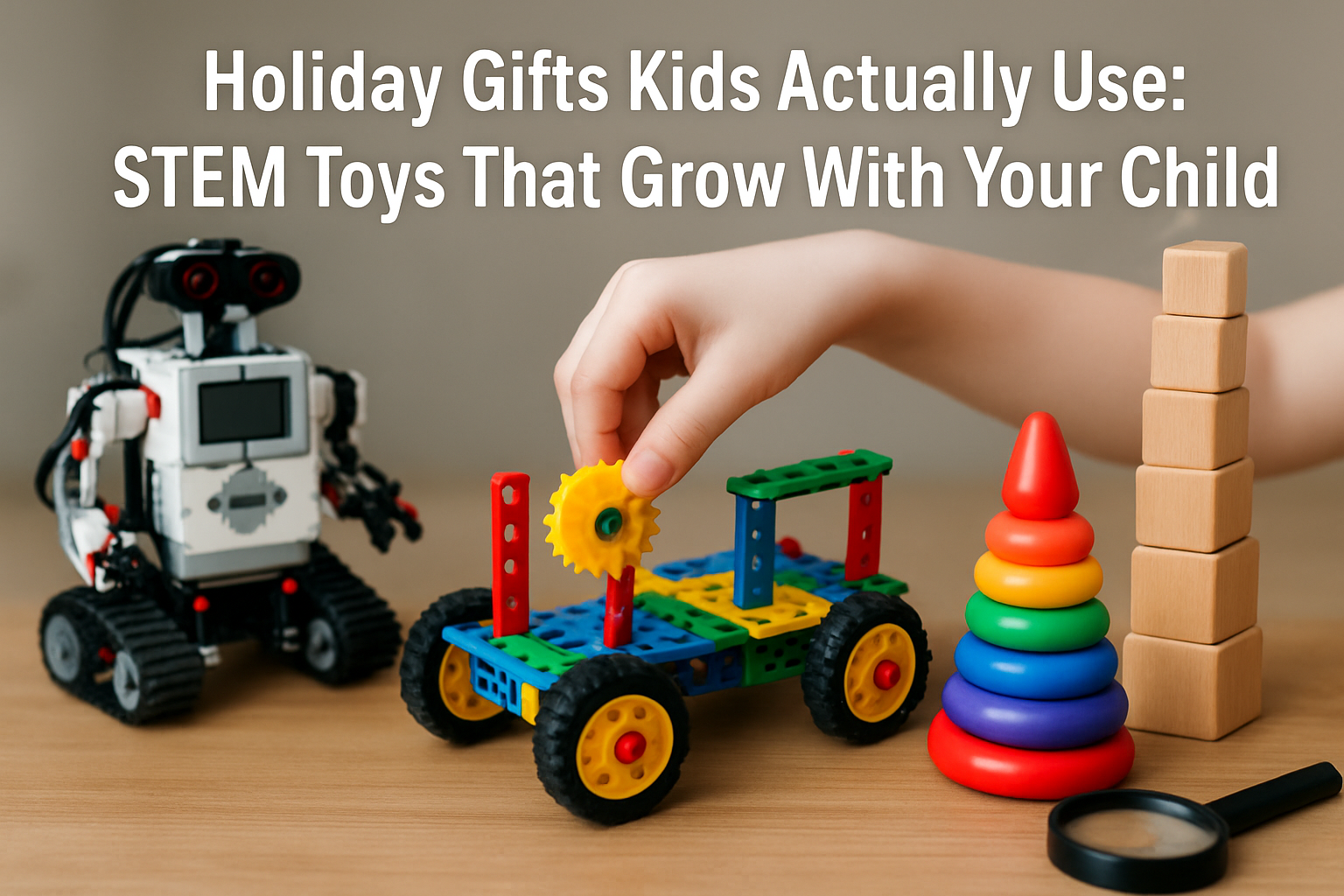

STEM toys are not just toys; they are gateways to curiosity and innovation. By combining science, technology, engineering, and mathematics, these toys serve as the foundation for a child's intellectual growth and exploration. The modern world is increasingly driven by technology, and providing children with STEM toys is not only a step towards digital literacy but also a means to develop critical thinking skills that will be crucial throughout their lives.
STEM education encompasses learning that integrates the disciplines of science, technology, engineering, and mathematics. It aims to cultivate skills that are essential in today's rapidly changing job market. STEM toys are designed to introduce these concepts to children in an accessible and engaging manner. These toys encourage hands-on experimentation and problem-solving, instilling a natural curiosity and excitement for learning that can span a lifetime. Whether it's building a simple structure or programming a robot, these activities help children make sense of the world around them.
The benefits of STEM toys are far-reaching. They enhance cognitive development, promote collaboration, and encourage creativity. Children learn to work independently while also appreciating teamwork as they solve problems or undertake projects with their peers. Engaging with STEM toys can lead to improved academic achievements, particularly in subjects that are integral to understanding the complexities of the world. Moreover, children who are exposed to these educational tools often develop a stronger affinity for these subjects, paving the way for future studies in STEM fields.
STEM toys strike a balance between education and enjoyment, ensuring that learning does not feel like a chore. These toys are designed to be fun while reinforcing essential skills. For example, a building block set offers a creative outlet while simultaneously teaching the principles of engineering and design. Similarly, coding games can make programming concepts accessible and enjoyable, nurturing a passion for technology. Ultimately, STEM toys transform the learning experience, encouraging children to explore, question, and innovate—all while having a great time.
Building and construction toys are foundational in a child's early development. They provide countless opportunities for creativity and problem-solving. As children stack blocks, assemble structures, or navigate design challenges, they actively engage their imaginations. This imaginative play encourages them to think critically about how materials fit together, fostering an environment where trial and error is not just accepted but celebrated. Such activities not only entertain but also sharpen cognitive abilities that are critical in various areas of life.
Moreover, these toys significantly promote fine motor skills and spatial awareness. As children manipulate different shapes and sizes, they enhance dexterity and coordination. This aspect is vital for tasks that require precision, from writing to any future careers in fields like engineering or architecture. As children grow, they can take on increasingly complex designs, scaling their activities to match their developing abilities. From simple block sets meant for toddlers to advanced construction kits designed for older children, these toys can evolve with a child's capabilities.
Examples of building and construction toys range from classic wooden blocks to sophisticated mechanical construction kits. Each type offers unique challenges that cater to different skill levels. As children experiment and create, they learn the basics of physics and engineering concepts without even realizing it. The appeal of these toys lies not only in their entertainment value but also in their ability to provide learning opportunities foundational to STEM fields.
Robotics kits serve as a powerful introduction to the world of coding and programming principles, making them an exciting choice for children of various ages. These kits engage children by allowing them to build and run robots, a process that combines various elements of STEM into a hands-on experience. By constructing their machines, children gain a deeper understanding of electronics and the mechanics behind robotic movement. Each time they follow instructions to assemble a robot, they reinforce essential skills such as logical reasoning and systematic thinking.
In addition to providing an engaging learning environment, robotics kits cater to various skill levels, from beginner to advanced. This adaptability ensures that children can continue to develop their skills as they grow older. Younger children may start with simpler, pre-programmed robots, while older kids might dive into more complex projects that involve coding their robots to perform various tasks. This progression not only keeps the learning process fresh and exciting but also fosters perseverance as children encounter and overcome challenges.
Furthermore, robotics kits encourage collaboration and teamwork, whether children are working with peers or participating in family activities. The excitement of programming a robot to complete a specific challenge can create bonding experiences. As children navigate through successes and failures together, they build interpersonal skills vital for future endeavors, both social and professional. This social aspect of learning alongside technology makes robotics an engaging and well-rounded choice for parents seeking STEM toys.
Science experiment kits offer a hands-on approach to learning about scientific principles, opening a world of curiosity and exploration for children. These kits often include engaging activities that allow kids to experiment with various scientific concepts, from chemical reactions to physics experiments. By conducting these experiments, children actively engage in the scientific method—forming hypotheses, executing experiments, and analyzing results. This process not only solidifies scientific knowledge but also encourages an inquisitive mindset, essential for lifelong learning.
The diverse topics covered in science experiment kits—ranging from chemistry and physics to biology—ensure that there is something for every budding scientist. By experimenting with different science disciplines, children develop a holistic understanding of the world around them. They learn to observe phenomena, ask questions, and seek out answers, fully immersing themselves in the learning process. This kind of active engagement is proven to promote deeper understanding and retention of information.
Moreover, science experiment kits can spark a passion for science that lasts a lifetime. As children conduct experiments, they are often inspired to pursue further reading or exploration of scientific topics outside the kit's confines. Whether it's growing crystals, creating a volcano, or exploring electrical circuits, these activities cultivate an appreciation for STEM fields. For parents, investing in such toys not only enriches their child's education but also lays the groundwork for future academic pursuits in science and technology.
Math games and puzzles are unique in that they enhance critical thinking and logic skills while ensuring that learning math is a fun and enjoyable experience. By incorporating engaging formats such as board games, card games, or digital applications, these tools cater to various learning styles. Children can practice mathematical concepts in a friendly and competitive environment, which helps improve their math skills without the pressure often associated with traditional learning methods.
The variety of formats available in math games allows children to explore different concepts, from basic addition and subtraction to more complex problem-solving and algebra. This diversity keeps children intrigued and motivated, as they can choose activities that align with their interests and skill levels. The design of these games often encourages collaborative play, promoting social interaction and teamwork while also targeting individual skill enhancement.
Importantly, math games make practicing math concepts fun and less intimidating. By changing the perception of math from a chore to an adventure, children are more likely to develop a lasting interest in the subject. As they play and learn, they build confidence in their mathematical abilities, setting them up for success as they continue their education. With the right math games and puzzles, parents can effectively nurture their child's enthusiasm for STEM, ensuring that math becomes a valued part of their lives.
Selecting suitable STEM (Science, Technology, Engineering, and Mathematics) toys is key to fostering a child's development and engagement in these fields. The first consideration should be age appropriateness. It’s important to match toys to the developmental stages of children. Toys designed for specific age groups cater to the cognitive and physical abilities characteristic of those ages. For example, simpler puzzles and building blocks may be ideal for toddlers, while more complex robotics kits could be better suited for older children. Guidelines for selecting age-appropriate STEM toys can be found through observing recommended age labels on packaging and consulting educational resources that provide insights into developmental milestones.
Additionally, understanding safety standards is crucial for different age groups. Not all toys are created equal in terms of safety; thus, checking for certifications and safety ratings can prevent accidents. Toys that are too advanced for a child's age may lead to frustration and disengagement, while those that are too simple may not provide sufficient challenge for growth. Therefore, choosing toys that align with their developmental needs helps ensure a positive learning experience.
Next, consider the child's personal interests when selecting STEM toys. Engagement is significantly influenced by a child's passions and curiosities. For instance, a child intrigued by nature may respond well to science kits that include biology experiments or gardening tools. Observing which areas of STEM captivate the child can inform choices that amplify their enthusiasm for learning. When children are genuinely interested in what they are playing with, they tend to retain information better, leading to deeper understanding and exploration of STEM concepts.
To maximize the benefits of STEM toys, opting for those that offer multiple uses and learning opportunities is important. Toys that can evolve with a child's skills ensure prolonged engagement, adapting to their growing capabilities. For example, building sets that can be reassembled in various configurations can foster creativity and problem-solving skills as the child's abilities develop. Furthermore, these types of toys encourage further exploration, allowing children to experiment and innovate.
Ultimately, the right STEM toys can vary greatly among children due to their individual preferences and developmental stages. Selecting age-appropriate options while aligning with personal interests will provide children with not only fun experiences but also invaluable learning opportunities. By emphasizing versatility and long-term use, parents can cultivate an environment where STEM learning thrives, paving the way for future academic success and a lifelong love for science and discovery.
Gifting STEM toys provides substantial educational benefits that support academic growth in crucial subjects like science, technology, engineering, and mathematics. These toys introduce complex concepts in a fun and engaging way, transforming theoretical knowledge into practical understanding. Children who interact with STEM toys develop a solid foundation in these essential areas, which can contribute to better performance in school. Furthermore, as children explore these toys, they tend to foster a sense of inquiry, making them curious about the traits of the world around them.
In addition to academic growth, STEM toys play a pivotal role in developing essential life skills. Many of these toys encourage problem-solving, critical thinking, and creativity. As children navigate challenges presented by the toys, they learn to approach obstacles methodically, think outside the box, and devise innovative solutions. Each step in their play leads to a learning experience, imparting skills that will serve them well throughout their lives—regardless of the career path they ultimately choose.
Moreover, STEM toys can guide children towards future career interests. When children engage with toys that highlight scientific principles or engineering challenges, they may find inspiration in potential career paths they had not previously considered. This early engagement can spark lifelong interests in fields such as robotics, medicine, or environmental science, helping shape their academic and professional futures. By gifting STEM toys, parents not only provide entertainment but also lay the groundwork for children to explore their passions and succeed academically.
One of the most significant benefits of gifting STEM toys is their ability to foster interaction between parents and children. Joint playtime offers a unique opportunity for families to create bonding moments, strengthening their relationship through shared experiences. Working together on a project or game can lead to laughter, problem-solving discussions, and a sense of accomplishment, all of which help families connect on a deeper level. This engagement is not just fun; it also plays a vital role in emotional and social development.
Furthermore, STEM toys encourage conversations about science and technology, broadening children’s horizons. As parents and children discuss the activities related to these toys, they engage in dialogue that promotes critical thinking and curiosity. Topics related to scientific concepts, technological advancements, and problem-solving strategies can emerge from casual play, enriching children's vocabulary and comprehension skills. Such discussions allow children to ask questions and explore answers, expanding their understanding of the world around them.
The benefits extend to enhancing learning through shared activities. Children are likely to absorb knowledge more effectively when involved in hands-on projects alongside a supportive adult. These interactions promote collaborative problem-solving and encourage brainstorming, enriching the educational experience. Moreover, these joint activities help create a culture of inquiry and resilience, where children feel comfortable exploring their curiosity and embracing challenges without fear of failure.
STEM toys are instrumental in instilling a love for learning from a young age. By engaging with these toys, children naturally develop a curiosity about their environment and a desire to explore new concepts. This intrinsic motivation is essential for lifelong learning, as it encourages children to seek out new skills and knowledge beyond the classroom setting. When children find joy in learning, they become more enthusiastic about academic exploration and achievement, laying the groundwork for future educational pursuits.
Play is crucial for educational experiences, particularly when it comes to complex subjects. Through play, children can experiment, take risks, and learn from their mistakes in a safe environment. STEM toys offer the perfect platform for such exploration; they allow children to test their hypotheses, modify their approaches, and explore various outcomes. The joy of discovering how things work alongside the thrill of navigating challenges creates memorable learning experiences that resonate with children.
Moreover, the long-term impact of fostering interests in STEM from a young age cannot be overstated. By nurturing these interests early on, parents can help their children develop a strong foundation for future learning. Children who find joy and interest in scientific or technological subjects are more likely to pursue related courses and careers in the future. This early exposure and encouragement can significantly influence their academic trajectories, helping them cultivate skills that are not only beneficial for personal growth but also valuable in our increasingly technology-driven world.
STEM toys play a vital role in the holistic development of children. These toys are designed to engage and educate, fostering essential skills in science, technology, engineering, and mathematics. As children manipulate these toys, they gain hands-on experience that promotes problem-solving and critical thinking abilities. Engaging with STEM toys encourages creativity and innovation, laying a strong foundation for future learning and career pursuits. This development extends beyond mere academic skills; it also cultivates social and emotional growth by allowing children to explore concepts collaboratively, thereby enhancing their teamwork and communication abilities.
When considering the selection of STEM toys for children, it's important to take their individual interests and developmental stages into account. A thoughtful selection process can lead to more meaningful learning experiences. For instance, a child fascinated by machines might benefit from toys that involve building structures or mechanisms, while a budding scientist may thrive with kits that allow for experimentation. By aligning toy choices with a child's interests, the learning becomes engaging and relevant, motivating them to explore further. Parents and educators should also look for toys that adapt to the child's evolving capabilities, ensuring continued challenge and interest as they grow.
Finally, when it comes to gifting, opting for STEM toys can create a positive impact on a child's educational journey. These toys can serve as a bridge to crucial skills needed in the modern world. Giving a child a STEM toy as a gift not only reflects an understanding of their interests but also encourages a lasting love for science and learning. By making informed choices about educational gifts, caregivers can inspire children to think critically and creatively, equipping them for the future. Choosing these tools with intention can foster a lifelong passion for discovery and inquiry, guiding children toward a path of success in an increasingly complex and technological world.



IntroductionSTEM toys are not just toys; they are gateways to curiosity and i...

IntroductionSTEM toys are not just toys; they are gateways to curiosity and i...